


Breaking news can reprice a prediction-market contract before the underlying event is settled. To interpret the move, separate the publication time, primary source, exact market question, before-and-after price, liquidity conditions, and final resolution.
This article walks you through five mini case studies from 2024 and early 2025. Each one separates the event, market question, before/after price path, outcome, source trail, beginner lesson, and risk note so the examples read like research rather than loose narrative.
Case study table
Case Study Summary
Use this table to compare the core case-study facts before reading the detailed fields below.
| Event | Date | Platform | Before Price | After Price | Final Result | Lesson |
|---|---|---|---|---|---|---|
| Fall of Damascus / Assad presidency market | November 27-December 8, 2024 | Polymarket | YES had traded around $0.92 for much of the year before the rebel offensive changed the setup. | The contract fell near $0.75 after Aleppo news, around $0.40 before Damascus, and under $0.05 as confirmations arrived. | NO; a separate Assad-leaves-Syria-before-2025 market settled YES. | A market can be stable for months and still break when a geopolitical event compounds faster than traders expected. |
| Hurricane Milton rapid intensification and Florida landfall | October 5-9, 2024 | Kalshi | The Cat 5 landfall side opened around $0.05. | It climbed near $0.75 during rapid intensification, then faded as Milton weakened before landfall. | Cat 5 landfall settled NO; a Cat 3-or-higher landfall setup settled YES. | The relevant question was landfall category, not peak category over water. |
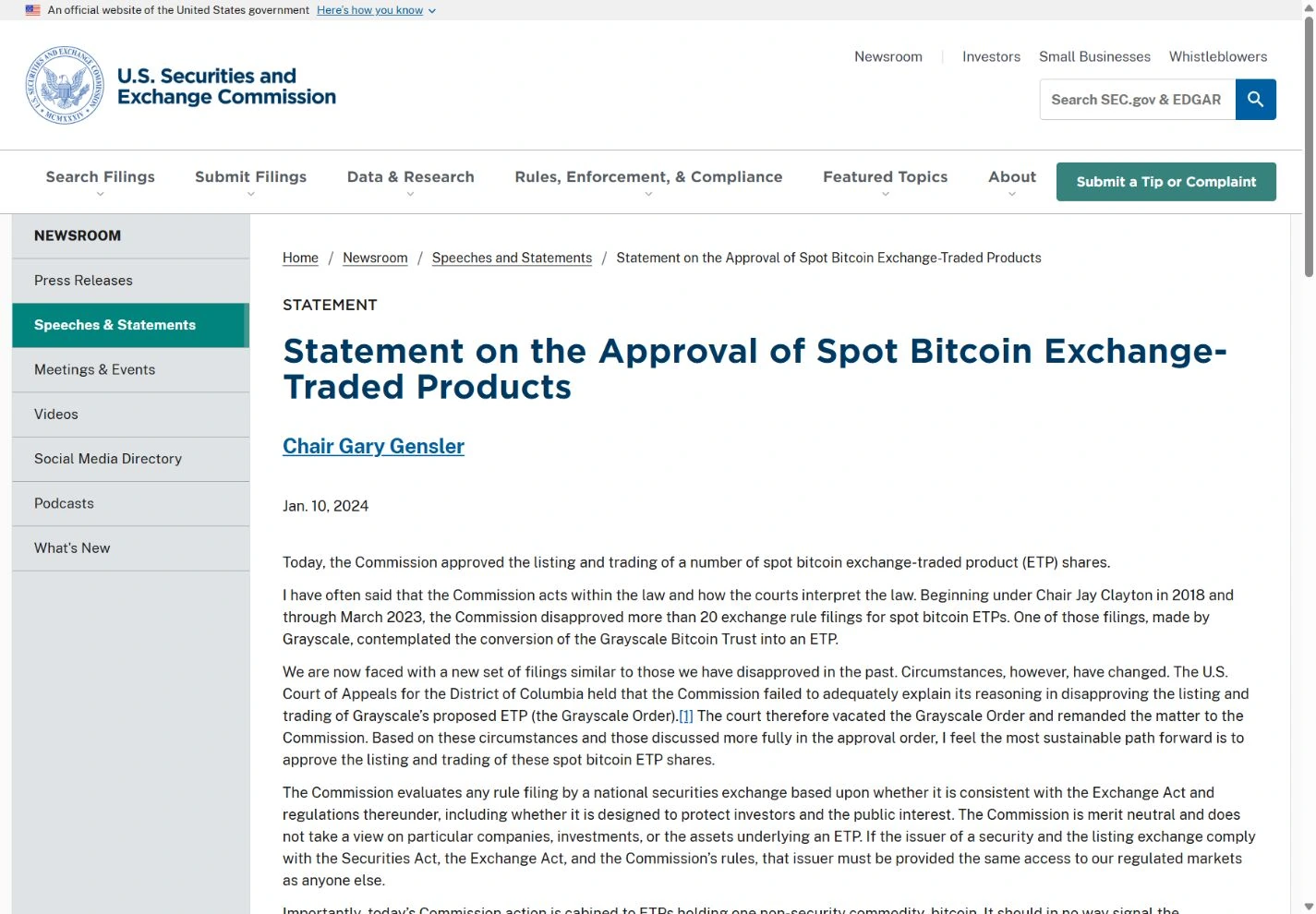
| U.S. spot Bitcoin ETF approval | January 9-10, 2024 | Polymarket | The approval side had traded around $0.92 for weeks before the decision window. | It whipsawed around the false SEC X post, then converged to YES after the real approval. | YES; the SEC approved listing and trading of spot bitcoin exchange-traded products. | A market can price an expected decision before the official headline arrives. |
| January 2025 Los Angeles wildfires | January 7-12, 2025, with later damage/insurance updates | Polymarket and other public prediction venues where available | The market opened around $0.30 after the fires began. | It moved toward $0.55 as evacuations and early damage estimates grew, then toward $0.85 as loss estimates rose. | Final settlement depends on the market's specified loss source and timing; this article treats it as an unfolding-damage example, not a shortcut to settlement. | Some events do not resolve in one headline; they update as official estimates and source-of-truth data arrive. |
| Celtics clinch the 2024 NBA championship | June 17, 2024 | Polymarket | The championship YES side sat around $0.94 before Game 5. | It fell toward $0.72 during Dallas's first-half run, then recovered toward $0.98 as Boston pulled away. | YES; Boston beat Dallas 106-88 and won the series 4-1. | Every possession can become a micro-catalyst, but one early run is not the whole game. |
Why Prediction Markets Are News-Sensitive
A stock price reflects one company’s expected cash flow. A prediction market price reflects the probability of one specific event. That difference matters. When news breaks, almost every relevant prediction market has to reprice immediately because the news directly changes the odds of the outcome the contract pays on.
Take a simple yes/no contract — what platforms call a binary market. If the contract pays $1.00 when the event happens and $0.00 when it does not, the live price tells you the crowd’s current probability estimate. A price of $0.55 means traders, on average, think there is a 55 percent chance. New information shifts that estimate, and the order book moves with it.
This is why prediction markets are sometimes treated as faster than polls or pundits. Money is on the line. Traders react in seconds, not days. But speed does not make a price automatically correct; it only shows how quickly participants are updating.
Case 1: The Fall of Damascus (Dec 8, 2024)
Mini case study
Syria December 2024: a slow consensus broke under a compounding shock
On the morning of November 27, 2024, opposition forces led by Hay’at Tahrir al-Sham launched a surprise offensive out of Idlib. By the end of that day Aleppo had fallen with almost no resistance. Polymarket‘s contract “Will Assad remain President of Syria through 2024?” had traded around $0.92 for most of the year — the consensus assumed yes. Within hours of the Aleppo news the price dropped to about $0.75, and activity increased sharply.
Then the second wave. Hama fell on December 5. Homs on December 7. On the morning of December 8, 2024, opposition forces entered Damascus and Bashar al-Assad fled to Moscow. The Polymarket contract — which had drifted to $0.40 the day before — collapsed to under $0.05 over the course of about six hours as confirmations rolled in from Reuters, AP, and Syrian state TV.
The contract settled NO. A separate “Assad leaves Syria before 2025?” market that had been trading sub-penny most of the year settled YES at $1.00. The lesson is sharp: geopolitical shocks compound. Traders who recognized after Aleppo that this was not a normal rebel push, but a regime-collapse moment, interpreted the market differently from those who assumed “Assad always survives.”
Case 2: Hurricane Milton’s Rapid Intensification (Oct 9, 2024)
Mini case study
Hurricane Milton: peak intensity was not the same as landfall settlement
On October 5, 2024, Tropical Storm Milton formed in the Gulf of Mexico, just over a week after Hurricane Helene had devastated the Southeast. Kalshi opened markets immediately: “Will Milton make landfall as Category 5?”, “Will Milton make landfall in the Tampa Bay area?”, and a series of intensity-category contracts. The Cat 5 contract opened around $0.05 — most modelers expected a strong storm but rarely the peak category.
Then came one of the most extreme intensification cycles ever recorded. On October 7, Milton’s central pressure dropped from 990 mb to 911 mb in about 24 hours. By midday October 8, the National Hurricane Center had it at 180 mph sustained winds and a 897 mb pressure — the second-most-intense Atlantic hurricane on record. The Kalshi Cat 5 contract climbed from $0.05 to $0.75 over those 24 hours, gapping up at every six-hour NHC advisory.
Then the second wave: as Milton approached the Florida coast on October 9, it ran into hostile shear and dry air that weakened it. The Cat 5 contract started fading. When Milton made landfall near Siesta Key the evening of October 9 as a Category 3 hurricane with 120 mph winds, the Cat 5 contract settled NO at $0.00, and a separate “Cat 3 or higher at landfall” market settled YES at $1.00. Traders who only watched the spectacular intensification missed the equally important coastal weakening. The lesson: hurricane markets reward traders who follow the full advisory cycle, not just the dramatic peak. For more on how Kalshi structures these contracts, our Kalshi review covers the platform in depth.
Case 3: Bitcoin Spot ETF Approval (Jan 10, 2024)
Mini case study
Spot Bitcoin ETF approval: when expected news leaves little upside
On the afternoon of January 10, 2024, the U.S. Securities and Exchange Commission was widely expected to either approve or deny eleven competing applications for spot Bitcoin ETFs. Polymarket’s contract “Will the SEC approve a spot Bitcoin ETF by January 15?” had traded around $0.92 for several weeks — the consensus was clearly bullish after a federal appeals court ruled against the SEC’s 2023 denial. But there was still meaningful tail risk that the SEC would punt the deadline or carve out unexpected conditions.
Then came a moment of bizarre confusion. On January 9, the SEC’s X (Twitter) account was compromised and posted a fake announcement claiming the ETFs were already approved. Bitcoin spiked $1,000 in minutes, then collapsed $2,000 when SEC Chair Gary Gensler confirmed the post was unauthorized. The Polymarket approval contract whipsawed from $0.92 to $0.97 to $0.88 in under an hour as traders tried to parse signal from noise.
The real announcement came at 4:00pm Eastern on January 10. Eleven spot Bitcoin ETFs were approved simultaneously. The Polymarket contract settled YES. But notice the second-order story: Bitcoin itself barely moved on the news (it had already priced in the approval over the previous months), confirming the “buy the rumor, sell the news” pattern. Traders who positioned in December 2023 when the contract was still trading in the $0.65-$0.75 range captured the bulk of the move. Those who bought at $0.95 in early January were taking a very different risk/reward trade, with only a few cents of upside before fees.
Case 4: The Los Angeles Wildfires (Jan 7, 2025)
Mini case study
Los Angeles wildfires: staged damage estimates create staged repricing
The afternoon of January 7, 2025, a brush fire broke out in Pacific Palisades during an extreme Santa Ana wind event. By that evening it was moving quickly through high-value neighborhoods in Southern California. A second fire — the Eaton Fire — ignited near Altadena within hours. Polymarket and other prediction venues opened a series of disaster-related contracts soon after.
The most-watched market was “Will the January 2025 Los Angeles wildfires become the costliest in US history?” — measured against the prior record (Camp Fire 2018, roughly $16.5B in insured losses). The contract opened January 8 around $0.30. Through January 9-10 it climbed to $0.55 as evacuation zones expanded and the first satellite damage assessments came in. By January 12, with early loss estimates moving into the tens of billions, the contract was at $0.85.
Final settlement took months — insurance industry damage tallies don’t finalize quickly — but the price arc tracked the unfolding disaster almost perfectly. The pattern: disaster markets do not see one big news shock. They see a series of escalating shocks as containment percentages, structure-loss counts, and damage estimates each get published on their own schedule. Traders who recognized the wind-and-fuel setup early — single-digit humidity, decades of drought stress, structures in the wildland-urban interface — had a very different view from traders who waited for later damage estimates.
Case 5: NBA Finals Game 5 — Celtics Clinch (June 17, 2024)
Mini case study
2024 NBA Finals Game 5: continuous news flow inside one event
Game 5 of the 2024 NBA Finals tipped off the evening of June 17, 2024 in Boston. The Celtics led the series 3-1 over the Dallas Mavericks and were heavy favorites to finish it at home. Polymarket’s “Celtics win 2024 NBA Championship” contract sat at $0.94 pre-game — about as high as a live sports contract gets before settlement.
Then the game started. Dallas opened on a 22-7 run. Within the first quarter the Celtics championship contract had dropped from $0.94 to $0.78 as live-betting algos absorbed the early deficit. By halftime, with Dallas leading by 8, the contract bottomed around $0.72. Then Boston came back — Jaylen Brown and Jrue Holiday took over the second half, the Celtics outscored Dallas 33-17 in the third quarter, and the contract climbed back through $0.85, then $0.92, then $0.98 as the lead grew into the double digits. Boston won 106-88 to clinch the franchise’s 18th championship. The contract settled YES at $1.00.
The Game 5 notes show one contract responding repeatedly while the underlying event was still in progress. That example does not prove that every possession caused a trade or that an intra-game reversal was predictable. It shows why timestamp, spread, depth, remaining game state, and final settlement must be separated.
Editorial Take: What These Five Cases Show
These selected cases show several different reaction paths, not one universal sequence. Some contracts repriced quickly, some moved in stages, and one live-sports example reversed before settlement. Five retrospective examples cannot establish how every news market behaves.
Timing matters. A before-and-after price pair is useful only when its timestamp can be aligned with the primary release and the exact contract question.
Execution conditions matter. A visible price can move while the spread widens or available size falls. The chart direction alone does not show the fill a reader could have obtained.
Settlement and the trading path are different. A contract can move in the correct final direction and still offer a poor entry price, or move against the eventual result before resolving.
Selection is a limitation. These cases were chosen because a reaction could be reconstructed from retained notes and sources. They do not include every quiet market, failed signal, or contract with incomplete historical data.
The useful conclusion is not to assume an initial overreaction or wait a fixed number of hours. Recheck the primary source, contract rule, bid and ask, depth, and maximum loss each time.
What I Would Check Before Trading News
This is an editorial decision checklist, not a claim that Event Trading Hub executed the trades described in the case studies.
Primary source and timestamp. Confirm what was released, when it became public, and whether a later correction or update changed it.
Contract fit. Translate the headline into the written resolution rule. If the release does not answer the contract’s exact question, there may be no trade thesis.
Current execution. Check bid, ask, spread, available size, fees, and whether the market already repriced before considering an entry.
Failure condition. Write what evidence would invalidate the interpretation and the maximum dollar loss before placing an order.
No-entry option. If the source, rule, or order book remains unclear, observing and recording the move is a complete decision. The event trading strategies guide and event trading hub provide broader frameworks, but neither turns speed into an edge.
Main Limitation: Speed Is Not an Edge
Some market participants may automate public feeds and order management, so a visible price can change before a reader finishes interpreting a headline. The exact reaction time varies by market, liquidity, source, and platform; it should be measured from timestamped data rather than assumed.
Slower interpretation is not automatically an advantage either. A second reading can still misunderstand the rule, rely on an incomplete source, or pay too much after the market has moved.
When the contract has already repriced, the spread is wide, the primary source is ambiguous, or the failure case cannot be stated, the defensible action is to watch rather than force a trade.
Frequently Asked Questions
How fast do prediction market prices move on news?
There is no single reaction speed. A liquid contract tied to a scheduled release may move quickly, while a thin or ambiguously worded market may adjust in stages. Establishing the timing requires timestamped source and market data; two screenshots cannot prove how fast the full repricing occurred.
Can beginners trade news effectively?
News markets combine source verification, contract interpretation, liquidity, and execution risk. A beginner can learn by recording the source time, rule, bid, ask, and later outcome without placing a trade. There is no fixed waiting window that makes an entry safe.
What kind of news matters most to prediction markets?
News that directly changes the probability of the contract’s resolution. For an election market, that is polls, debate performance, and major endorsements. For a Fed market, it is inflation prints, jobs reports, and Fed speeches. For a weather market, it is official advisories from the NHC or NOAA. Generic political commentary or financial punditry rarely moves prices much.
How do I find prediction markets quickly during a news event?
Use platform search and category pages to identify relevant contracts, then confirm that the written rule actually covers the event in the headline. Finding a market after it has moved does not create a reason to enter; the no-trade option remains available.
Are prediction markets ever wrong about news?
A prediction-market price is a traded estimate, not a verified fact. The Celtics Game 5 example above shows one contract falling and then recovering before settlement, but one reversal does not establish a general rule about first-hour or longer-term accuracy.
Should I use Polymarket or Kalshi for trading news?
It depends on what you trade and where you live. Polymarket and Kalshi can differ by product, region, funding model, market category, and current rules. Kalshi describes itself as CFTC-regulated; Polymarket availability and product details should be checked against current official terms. Always verify availability and rules before using either platform.
Original value worksheet
Breaking-event timeline worksheet
Use this timeline when a real-world event hits and market prices start moving. It separates the news event from the tradeable contract reaction.
Source notes
Figure and Source Notes
This note explains how to read the numbers on this page so examples are not mistaken for unsourced platform facts.
- Official outcome sources checked include the SEC spot bitcoin ETP statement, the NHC Hurricane Milton report, and the NBA Game 5 page.
- Market-price paths are approximate case-study notes from platform charts or archived references, not live quotes. Re-open the original market chart before using any price path as standalone data.
- Syria and Los Angeles wildfire examples are used as news-reaction teaching cases. Treat event-timeline and damage-estimate references as contextual notes unless the named source is reopened for a standalone claim.
- $1.00 and $0.00 settlement examples describe gross binary-contract mechanics before fees, spreads, taxes, withdrawal costs, or platform-specific rules.
- Example prices and probabilities on this page are teaching math, not historical platform-price records or performance data.
- Fees, limits, country/state availability, deposit methods, withdrawal methods, and resolution rules can change by platform and market. Check the current official rules before using real money.
Risk notice
Prediction markets involve risk
Prediction markets and event contracts involve financial risk. You can lose money, including the full amount committed to a contract.
Event Trading Hub is for education and research only. This is not financial, investment, legal, or tax advice. You are responsible for your own decisions and for checking platform rules, fees, availability, and local regulations before trading.