


A move from $0.62 to $0.65 is a three-percentage-point change in the market’s implied probability, not proof that the event became three points more likely. Read probability movements together with timing, volume, spread, order-book depth, news, and the written resolution rule.
The sections below separate slow drift, news shocks, and settlement-period moves, then show how price, volume, spread, and depth can support or contradict the first interpretation.
What a Price Actually Means
A binary contract has a defined YES outcome and NO outcome. If the contract resolves YES, a winning YES share commonly pays $1.00 and a losing YES share pays $0.00, subject to the venue’s rules and fees.
A last trade at $0.65 is commonly read as a 65% implied probability. It is not a calibrated forecast by itself. The executable bid and ask may differ from the last price, and YES/NO prices can deviate from a clean $1.00 pair because of spread, fees, separate order books, or venue mechanics.
Case study table
Case Study Summary
Use this table to compare the core case-study facts before reading the detailed fields below.
| Event | Date | Platform | Before Price | After Price | Final Result | Lesson |
|---|---|---|---|---|---|---|
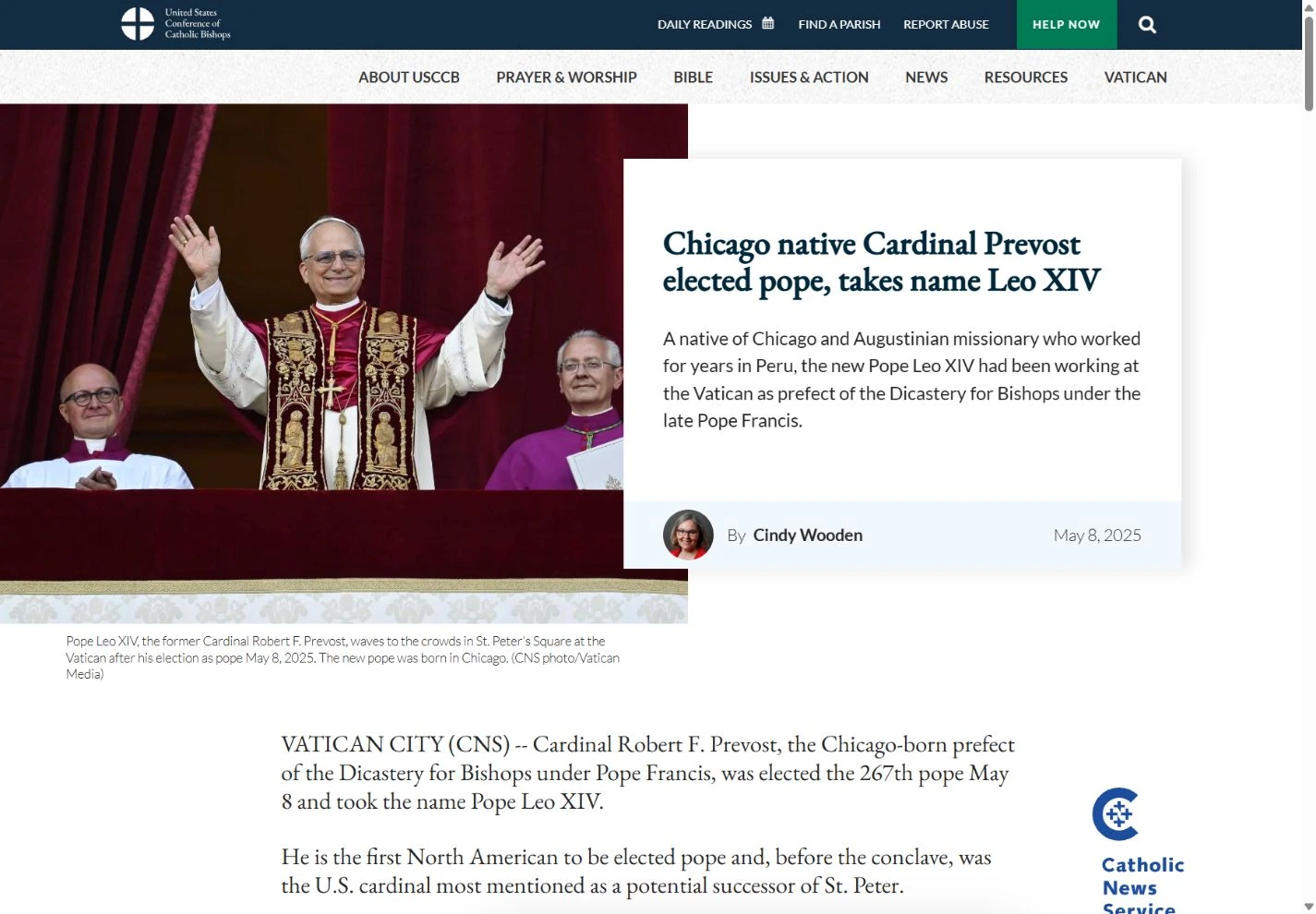
| 2025 papal conclave | April 21-May 8, 2025 | Polymarket | Parolin moved from roughly $0.18 after Francis's death to about $0.29 by conclave day; Prevost was below $0.01 the morning of the white smoke. | The Leo XIV/Prevost side moved sharply after white smoke and converged to $1.00 after the name was announced. | Robert Francis Prevost was elected Pope Leo XIV. | A slow upward drift means consensus is changing; it does not prove the market has access to the private decision. |
Mini case study
2025 papal conclave: slow drift can still miss the final decision
This is why pricing math matters: a market price is useful context, not a guarantee. The papal example is useful precisely because the market had a visible favorite and still missed the final closed-door decision.
The Three Speeds of Probability Movement
Slow drift, news shocks, and settlement-period moves are useful chart descriptions, not trading signals. The same five-cent change can have different causes depending on the time window, source, rule, spread, and available size.
Slow drift can reflect accumulating information, position changes, or thin trading. It does not prove that fundamentals improved or that the direction will continue.
News shocks can reflect a primary release, a correction, a headline interpretation, or temporary order-book imbalance. A quick move should be matched to the exact source timestamp before it is treated as information.
Settlement-period moves can reflect increasing outcome clarity, but also capital lockup, dispute risk, thin liquidity, and traders exiting before resolution. A price near $1.00 still carries asymmetric downside for a new YES buyer.
Reading Slow Drift: Trend, Not Proof
The 2025 papal-conclave case on this page shows prices changing over several weeks and then missing the eventual selection. It is useful precisely because a smooth chart can look persuasive without being correct.
For a slow move, compare source dates, total and recent volume, bid-ask spread, depth, and whether several contracts depend on the same narrative. A trend is an observation to explain, not an instruction to follow.
Reading News Shocks: Verify the Trigger
Hypothetical stress test: a major earnings release lands, a related event contract gaps down, and the spread widens. Before interpreting the move, ask whether the release changed the contract’s exact resolution condition or only changed the first headline narrative.
The first move can continue, reverse, or stall. The what is event trading primer provides broader context, but no chart shape proves which path comes next.
Reading Volume vs Price
Volume shows turnover, not truth. High or low volume can add context, but it cannot identify informed trading, manipulation, or future direction without other evidence.
High volume with a small move can mean balanced disagreement, repeated short-term trading, or offsetting positions. Low volume with a large move can mean thin depth, but the cause is not visible from the chart alone. High volume with a large move shows strong activity in one direction, not certainty about settlement.
Read price, recent volume, spread, depth, source timing, and contract rules together. If those fields cannot be aligned, label the cause unknown instead of assigning a story to the move.
The Order Book: Execution Context
The last traded price omits the current bid, ask, spread, and available size. The order book adds execution context, but displayed orders can be cancelled, replaced, partially hidden, or consumed before another reader acts.
Reading depth
Depth is the displayed size available at each price level. Compare the amount near the best bid and ask with the order size being considered. A single snapshot does not show how quickly that depth will change.
Walls and hidden size
A large displayed order can slow movement at one level, disappear, or be filled. Repeated replenishment may suggest hidden or refreshed size, but public snapshots do not prove who placed it or why.
Before placing any order, check whether the rules, spread, visible depth, fees, and maximum loss fit the decision.
Using Implied Probability vs Polls
A poll and a prediction-market price measure different things. A poll estimates responses from a defined sample at a defined time. A market price reflects the trades that cleared under one contract’s deadline, resolution rule, liquidity, fees, and participant mix.
When a poll average and a market price disagree, first align the dates, population, event definition, and information cutoff. Then check the bid, ask, spread, available size, and whether a new primary source appeared after the latest poll fieldwork.
Editorial take: disagreement is a research prompt, not automatic evidence that either the poll or the market has found the truth. The papal case shows the boundary clearly: traded prices described participant expectations, while the final decision remained with people outside the market.
Editorial Take: What a Price Move Does Not Prove
A price move proves that trades cleared at different levels. It does not, by itself, prove that the new implied probability is accurate, that informed participants caused the move, or that the same direction will continue.
Volume does not prove correctness. Turnover can increase because participants disagree or reposition. Compare it with spread, depth, timing, and the source that supposedly changed the estimate.
A high price does not make downside small. Buying a YES contract at $0.95 offers at most $0.05 of gross upside while risking up to $0.95 if it resolves NO, before fees and execution costs.
The displayed order book is temporary. Bids and asks can be cancelled, replaced, or hidden, so one snapshot cannot establish durable support or resistance.
Decision rule: before acting on a move, record the information trigger, current bid and ask, available size, resolution rule, maximum loss, and the evidence that would reverse the interpretation. The event trading strategies guide shows how to place that check inside a broader decision process.
Tools for Tracking Movements
Start with the venue’s own market page and record the fields needed for the question: timestamp, last trade, bid, ask, visible depth, volume window, contract rule, and primary source.
Platform charts. A market page such as Polymarket may provide price history and an order book, but available fields and interfaces can change. Save the observation time and do not treat a chart image as a complete trade record.
Cross-platform views. A price difference is meaningful only after confirming that the contracts have equivalent wording, deadlines, resolution sources, fees, and access conditions.
APIs or exported data. These can support repeatable analysis when timestamps and field definitions are retained. They do not correct a weak contract match or missing historical data.
One consistent worksheet is more useful than several dashboards that measure different fields. Tool choice does not replace the interpretation and limitation checks above.
Frequently Asked Questions
Why does the price move when no public news appeared?
Possible causes include new orders, cancelled liquidity, position changes, private interpretations of existing information, or a source you have not found. Price and volume alone cannot identify the cause, so record it as unknown until evidence appears.
How do I see historical prices?
Check the current market page, official API, or a documented export when available. Record the retrieval time, field definitions, and gaps. A third-party chart can be a lead, but material claims should be traced back to the strongest available source.
What’s a “wall” in the order book?
A wall is a large displayed limit order at one price level. It may remain, be filled, or be cancelled. Its presence does not prove durable support, resistance, or the trader’s intent.
Why are spreads wider on small markets?
Limited competition and uncertain inventory risk can contribute to a wider spread. The practical check is the current executable bid and ask, not a universal volume threshold.
Do bots manipulate prices?
Automated order management may be present, but a public chart usually cannot identify which orders are automated or whether a move was manipulative. Avoid assigning intent without venue data or enforcement evidence.
Should I trust the price near settlement?
Do not replace the resolution rule with the price. Near settlement, check the controlling source, dispute process, spread, remaining upside, maximum downside, fees, and capital lockup. The event trading hub explains how those checks fit the broader contract process.
Practice Exercise
Choose one published market to observe without trading. Record the start and end time, last trade, bid, ask, visible depth, volume window, contract rule, and any primary-source update.
Write an initial interpretation, then mark which observations support it, contradict it, or remain unknown. Repeat on a different market if useful. A few sessions can expose gaps in the worksheet; they cannot prove a reliable market pattern or trading edge.
Original value worksheet
Probability move reading worksheet
Use this worksheet when a market jumps and you need to decide whether the move contains information, noise, or just thin trading.
Source notes
Figure and Source Notes
This note explains how to read the numbers on this page so examples are not mistaken for unsourced platform facts.
- The Pope Leo XIV outcome is supported by USCCB/Catholic News Service reporting.
- The Polymarket conclave price path is retained as an approximate market-chart/reference note from the 4.2 case-study pass; re-open the archived market chart before reusing it as a standalone statistic.
- Order-book depth, wall-size, spread, and liquidity examples are teaching examples, not current live market measurements.
- $1.00 and $0.00 settlement examples describe gross binary-contract mechanics before fees, spreads, taxes, withdrawal costs, or platform-specific rules.
- Example prices and probabilities on this page are teaching math, not historical platform-price records or performance data.
- Fees, limits, country/state availability, deposit methods, withdrawal methods, and resolution rules can change by platform and market. Check the current official rules before using real money.
Risk notice
Prediction markets involve risk
Prediction markets and event contracts involve financial risk. You can lose money, including the full amount committed to a contract.
Event Trading Hub is for education and research only. This is not financial, investment, legal, or tax advice. You are responsible for your own decisions and for checking platform rules, fees, availability, and local regulations before trading.